
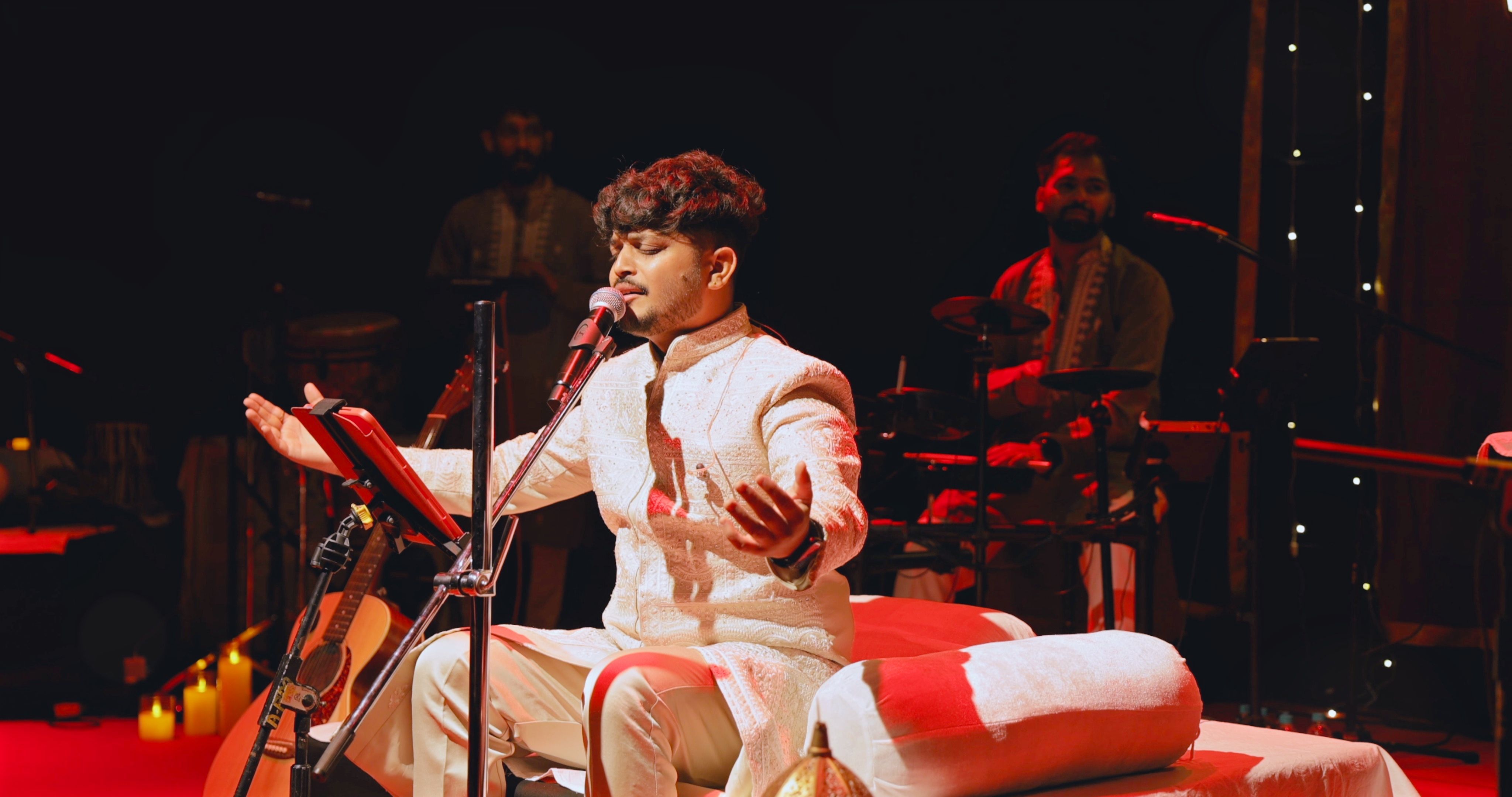
Chapter 1 of The Bhajan Jamming Revolution: what Bhajan Jamming means, how it draws on India's bhakti traditions, and how The Divine Jam by Nitesh Sharma brings traditional bhajans into participatory live concerts.
The Bhajan Jamming Revolution — Chapter 1 of 5
There is something extraordinary about a room filled with people singing the same devotional melody.
For a few moments, the distance between the performer and the audience disappears. Voices come together, hands begin to clap, and a familiar bhajan becomes something deeply personal yet beautifully collective.
This is the essence of Bhajan Jamming.
Rooted in India's rich traditions of devotional singing, Bhajan Jamming brings the emotional power of bhakti into contemporary live music. It is not simply about presenting traditional devotional compositions with modern instruments. It is about creating an atmosphere where music, participation, and devotion become inseparable.
In this first chapter of The Bhajan Jamming Revolution, we explore what Bhajan Jamming is, where it draws its inspiration from, and how The Divine Jam, the band founded and owned by Nitesh Sharma, performs it on stage.
What Exactly Is Bhajan Jamming?
Bhajan Jamming is a participatory style of live devotional music in which traditional or contemporary bhajans are performed through collaborative musical arrangements.
The word "jamming" comes from the language of live music, where musicians play together, respond to one another, and allow a piece to grow naturally in the moment. When that spirit meets the bhajan — a song of devotion — the result is a performance that feels both structured and spontaneous.
Depending on the ensemble, a performance may combine harmonium, tabla, dholak, flute, acoustic guitar, keyboard, drums, and other instruments.
Unlike a conventional concert where the audience primarily listens, Bhajan Jamming often invites people to sing along, clap, respond to familiar devotional phrases, and become part of the music. The arrangements may be contemporary, but the intention remains rooted in devotion.
The Heart of Bhajan Jamming Is Bhakti
Bhakti — loving devotion to the divine — sits at the centre of every bhajan. Whatever the arrangement, the purpose of the music is to express reverence, gratitude, longing, surrender, or joy.
A Long Tradition of Singing Together
Indian devotional music has a long, well-documented history of bringing people together through shared singing. Kirtan and sankirtan, forms of devotional singing often performed in a call-and-response style, have been part of community worship for centuries. Many of the bhajans still sung today are attributed to poet-saints of the bhakti traditions, such as Mirabai, Kabir, Surdas, and Tulsidas.
From intimate satsangs at home to temple celebrations and festival gatherings, these songs have travelled across generations, often learned by ear and sung together rather than performed for a silent audience.
Where Bhajan Jamming Fits In
Bhajan Jamming draws inspiration from these traditions while presenting the music through the energy and production of a modern live performance.
It is best understood as one contemporary way of enjoying devotional music, rather than a replacement for traditional forms. The goal is not to change what a bhajan means. It is to create another meaningful setting in which audiences can feel it.
Where Traditional Instruments Meet Contemporary Sounds
One of the defining characteristics of Bhajan Jamming is its musical flexibility.
The harmonium may establish a familiar devotional melody while the tabla or dholak provides a traditional rhythmic foundation. An acoustic guitar may add harmonic warmth. A flute can introduce a delicate melodic passage, while keyboards and percussion help shape the overall arrangement.
The Sound of a Bhajan Jam
Instruments you may hear in a Bhajan Jamming performance include:
- Harmonium — the familiar melodic voice of many devotional gatherings
- Tabla and dholak — rhythmic foundations rooted in Indian musical traditions
- Flute — gentle melodic colour for reflective passages
- Acoustic and electric guitars — harmonic depth and contemporary texture
- Keyboards, drums, and percussion — dynamics that help the music build and release
When performed thoughtfully, these instruments complement one another rather than compete for attention. The resulting sound can move naturally between quiet reflection and energetic collective singing — sometimes within the same bhajan.
When the Audience Becomes Part of the Music
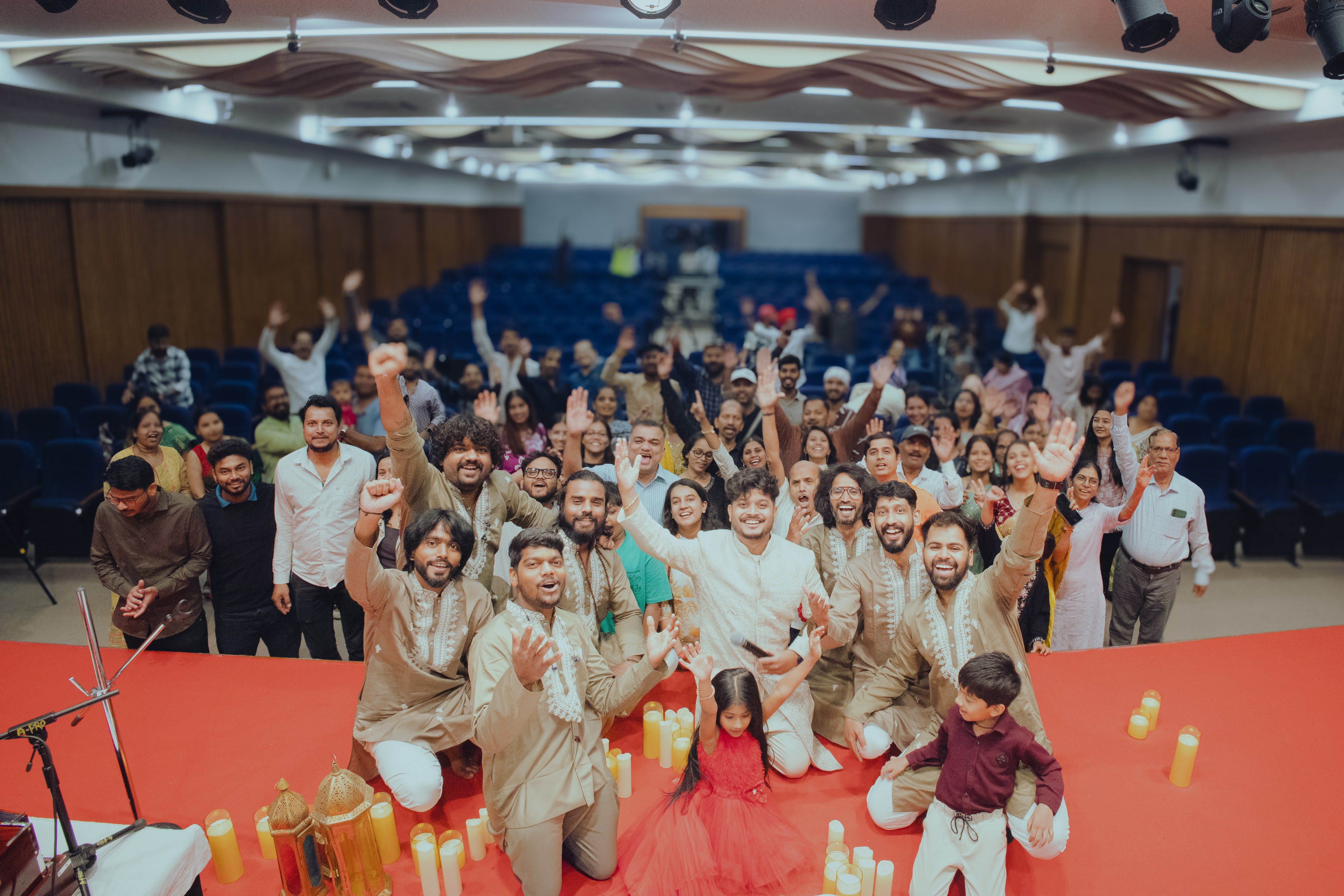
Perhaps the most memorable element of Bhajan Jamming is audience participation.
The Power of a Familiar Refrain
Many bhajans are built around short, repeated lines — a name of the divine, a phrase of praise, a simple refrain. These are easy to learn and easy to join. Once a refrain begins, an entire gathering can sing it together, often without needing printed lyrics.
A gentle devotional passage may encourage stillness and reflection. An energetic bhajan may inspire clapping, smiles, and joyful participation.
No Two Gatherings Sound the Same
Every audience responds differently, which is why no two live performances feel exactly the same. Musicians can listen to the room — extending a refrain when the gathering is singing along, or easing the tempo when a quieter moment feels right.
At The Divine Jam, this connection between artist and audience is central to every performance by the band. On 27 June 2026, The Divine Jam performed a dedicated live concert at Dr. D. Y. Patil B-School Auditorium in Tathawade, Pune, bringing devotional music into a full concert setting. You can explore photographs and performance films from The Divine Jam in the gallery and videos sections of our website.
What Makes The Divine Jam Different?
Founded and owned by vocalist and musician Nitesh Sharma, The Divine Jam is a band that approaches devotional music as a complete live performance rather than a sequence of songs.
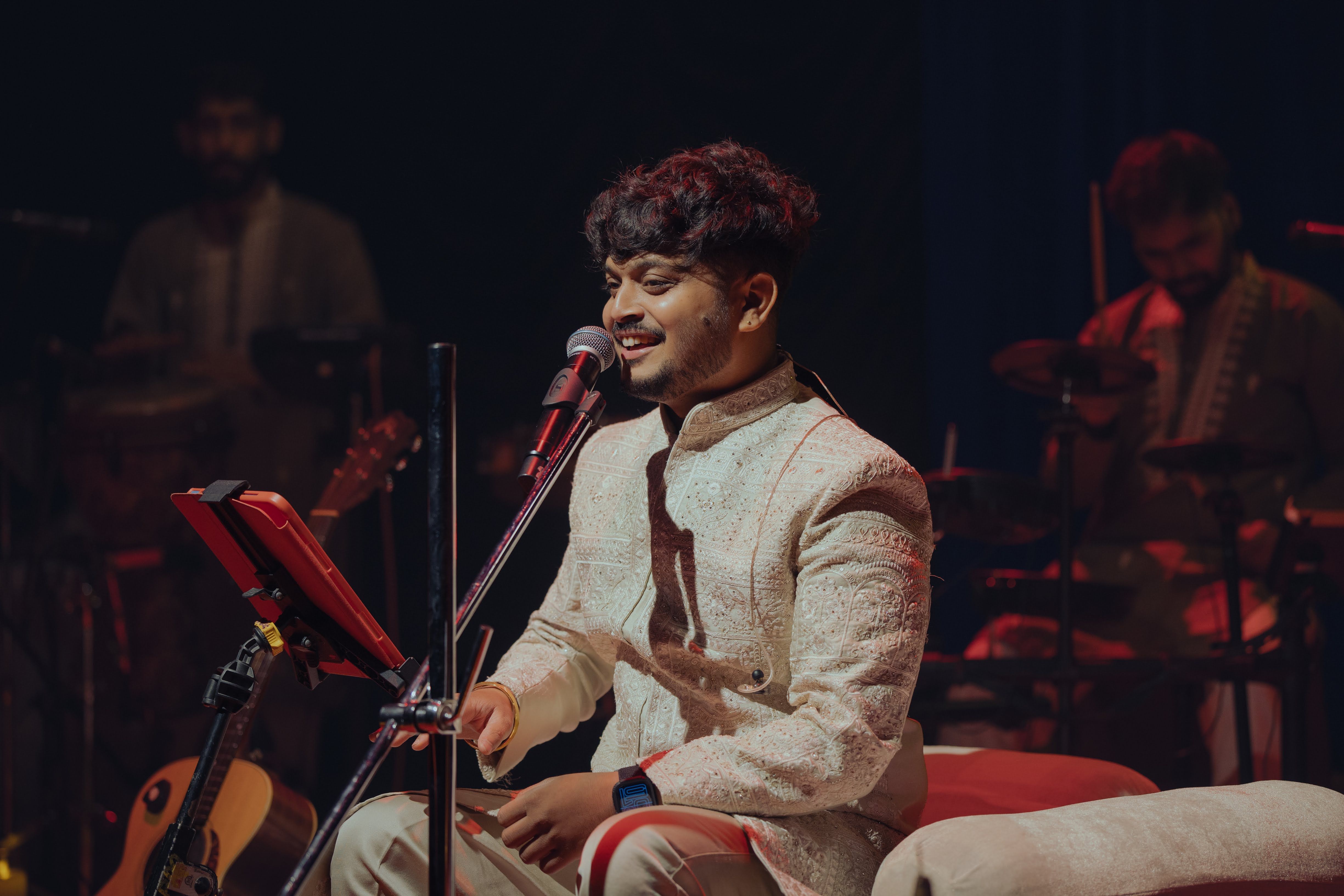
The musical arrangements bring together traditional Indian instruments and contemporary concert instrumentation. Selected concert formats also include devotional storytelling, guided meditation, and mantra chanting.
A Performance Designed as a Journey
Rather than treating every bhajan as a standalone song, the artistic direction considers how an entire performance can move through different emotions and devotional themes — from calm, meditative openings to joyful moments of collective singing, and back to stillness.
The aim is to create an atmosphere that is musically engaging while remaining spiritually meaningful and respectful of the traditions the music comes from. You can read more about Nitesh Sharma's musical journey in the About section of our website.
Why Bhajan Jamming Connects with Different Generations
Devotional music is deeply connected with family traditions, festivals, and shared cultural memories.
Contemporary arrangements can make familiar bhajans approachable to audiences with different musical preferences. Older listeners may recognise melodies and devotional expressions they have cherished for years. Younger listeners may connect with the energy of a live band and the opportunity to participate.
Bhajan Jamming can bring these feelings together without requiring everyone to engage with the music in exactly the same way. A grandparent may sing every word with eyes closed, while a grandchild claps along to the rhythm — and both are part of the same moment.
Bhajan Jamming: Common Questions
Is Bhajan Jamming the same as kirtan?
They are closely related. Both centre on shared devotional singing, and both often use repetition and call-and-response. Bhajan Jamming typically adds contemporary live-band arrangements and concert-style presentation, while kirtan is more often associated with traditional instrumentation and settings.
Do I need to know the bhajans to take part?
Not at all. Many bhajans use simple, repeated refrains that are easy to follow. Listening quietly is just as welcome as singing along.
Where can Bhajan Jamming be performed?
Bhajan Jamming can be presented in auditoriums and concert halls, at family celebrations, at weddings and pre-wedding functions, and at community or corporate gatherings — wherever people wish to come together through devotional music.
More Than Entertainment
Live devotional music can offer something beyond conventional entertainment. It can create moments of shared reflection, celebration, and connection.
For some people, the music is deeply spiritual. For others, it may be an opportunity to reconnect with familiar music, family memories, or cultural traditions. These different responses can coexist within the same gathering. That is part of what makes participatory devotional music meaningful.
The Journey Continues
Bhajan Jamming is one expression of the enduring relationship between music and devotion in India. As artists explore new arrangements and performance formats, the essential qualities of devotional singing — sincerity, participation, and emotional connection — remain at its heart.
Through The Divine Jam, Nitesh Sharma continues exploring how traditional devotional music can be presented with contemporary musical artistry.
In Chapter 2 of The Bhajan Jamming Revolution, we explore how this style of live music can become part of Indian wedding celebrations.
See The Divine Jam Live
Discover The Divine Jam by Nitesh Sharma and explore opportunities to book the band for your celebration, event, or community gathering.